Walk into any star party and you will see three silhouettes: a slender refractor pointed at the Moon, a fat open-ended Newtonian, and a short catadioptric that looks almost like a camera lens. They all gather light, but they do it in different ways, and those differences shape setup time, maintenance, and what you can photograph. The right choice depends less on fashion than on where you store the telescope, what you want to see, and how much fiddling you enjoy. No design is universally best; each is a bundle of trade-offs involving aperture, portability, cost, and convenience.
The three designs in plain terms
A refractor uses a lens at the front of the tube. Light passes straight through to the eyepiece, and the tube is usually sealed against dust. This simple light path gives refractors a reputation for crisp, high-contrast views, especially when the lens is well made. Apochromatic refractors use special glass to control color fringing; simpler achromats show violet halos on bright objects such as the Moon, Venus, or Jupiter. A small apochromat can be a superb lunar and planetary scope, but refractors become expensive quickly as aperture grows.
A reflector uses a mirror at the back of an open tube, with a small secondary mirror near the front directing light to the eyepiece. The Newtonian is the common amateur version. Mirrors avoid the color problems of simple lenses and deliver the most aperture for the money, which is why a modest 8-inch Dobsonian can outperform a much more expensive refractor on faint deep-sky objects. The trade-offs are an open tube, a central obstruction, and the need to collimate the optics from time to time. A Dobsonian is not a separate optical design; it is a simple alt-az mount often paired with a Newtonian tube.
A catadioptric folds the light path with both lenses and mirrors. Schmidt-Cassegrains and Maksutov-Cassegrains are the familiar types. The folded path makes a long focal length fit into a short, sturdy tube, which is why these scopes look compact for their aperture. An 8-inch Schmidt-Cassegrain may be shorter than a 4-inch refractor, yet it offers much more light-gathering power. The price is a narrower field of view, a corrector plate or meniscus that attracts dew, and a design that often favors high magnification over wide star fields.
Portability and setup
Portability is not just weight. Tube length, balance, storage space, and the number of trips from closet to garden matter more than a catalog figure. A long refractor can be awkward on stairs even when it is light; a short catadioptric may pack easily but need a substantial mount. The mount is part of the telescope, not an accessory you can ignore.
- An 80–100 mm refractor on a simple alt-az mount is a true grab-and-go setup. Carry it out, point it, and observe. It is ideal for short sessions when clouds are moving fast or when you only have twenty minutes after dinner.
- A 6–8 inch Dobsonian usually travels as two loads: tube and base. It is quick to assemble, but it needs floor space and a car with room. A 10-inch Dobsonian is still manageable for many adults, though it starts to feel like furniture rather than equipment.
- A 6–8 inch SCT or a 5-inch Maksutov stores in a small case, yet the mount can weigh as much as the tube. Count the whole package, not only the optical tube. A GoTo mount adds convenience but also batteries, cables, and alignment steps.
A telescope that takes two minutes to set up will be used far more often than a larger one that requires a project. Also consider eyepiece position: a refractor puts the eyepiece at the rear, a Newtonian puts it near the front side, and a catadioptric puts it at the back. For children or observers with limited mobility, that difference can matter as much as aperture.
Maintenance, collimation, and cooling
Refractors are the least demanding. The sealed tube keeps dust off the objective, and collimation is rarely needed unless the scope has been knocked hard. Clean the lens only when it is visibly dirty; overcleaning does more harm than a little dust. Store the scope with the caps on and let it dry before sealing it away after a dewy night.
Reflectors reward a little maintenance. The open tube invites dust, and the mirrors may need cleaning after years of use, not every month. Collimation is the regular task, especially after transport. A Cheshire eyepiece or a simple sight tube is enough for most Newtonians, and the process becomes quick with practice.
- Let the telescope cool before judging the image; a warm mirror creates tube currents that look like poor optics.
- Check the secondary mirror is centered under the focuser.
- Adjust the primary mirror until the reflection of the eye or Cheshire pattern is centered.
- Finish with a star test at high power, making small tweaks only if the out-of-focus rings are uneven.
- After a rough car trip, check collimation before a critical observing session, but do not obsess over it on every outing.
Catadioptrics sit in between. They hold collimation well but can drift after bumps, and the corrector plate or meniscus attracts dew and dust. A dew shield is basic equipment; a heater may be needed in humid conditions. All three designs need time to reach outside temperature, but open reflectors often settle faster than sealed catadioptrics. In cold weather, a catadioptric may need an hour or more before it shows sharp planetary detail.
Visual observing: what the design changes
For the Moon, planets, and double stars, a good refractor delivers clean, high-contrast views with very little fuss. The lack of a central obstruction helps fine detail, and a quality 4-inch apochromat can be surprisingly satisfying on lunar craters and Jupiter’s cloud belts. But aperture is still aperture: a 4-inch refractor cannot show the faint galaxies that an 8-inch reflector can. Contrast and convenience are refractor strengths; light grasp is not its bargain.
A Newtonian reflector, especially on a Dobsonian mount, is the value champion for deep-sky observing. An 8-inch Dobsonian under dark skies can reveal dozens of Messier objects in a night, from the Orion Nebula to the Whirlpool Galaxy. A 10-inch or 12-inch version goes deeper still, showing structure in globular clusters and faint spiral arms that smaller scopes hint at. The wide field of a short-focus Newtonian also makes star-hopping easier, though fast mirrors may need a coma corrector for edge sharpness.
A catadioptric is a compact high-magnification instrument. An 8-inch Schmidt-Cassegrain at f/10 gives a long focal length, making it a natural choice for planets, the Moon, and small planetary nebulae. A 5-inch Maksutov is a favorite for lunar and planetary work because it is compact and holds collimation well. The narrow true field can make finding objects harder without a good finder, and GoTo or tracking mounts are common companions for this reason.
Focal length, field of view, and exit pupil
Focal ratio and focal length shape the viewing experience as much as aperture. A short refractor or f/5 Newtonian can frame the Pleiades or a wide sweep of the Milky Way; an f/10 SCT or f/12 Maksutov excels at pushing magnification on a small target. A 2-inch focuser helps any design achieve a wider field, but it cannot turn a long-focal-length catadioptric into a rich-field scope. Think about the targets you actually observe before chasing a specification sheet.
Astrophotography and the mount question
For deep-sky astrophotography, small refractors are popular because they are sealed, hold collimation, and deliver wide, flat fields with the right field flattener. Newtonians can be excellent imaging scopes, but they need a coma corrector, careful collimation, and a mount that can carry their bulk. Dobsonians are usually visual instruments unless placed on a tracking platform, though they can still do impressive planetary imaging with a camera and lucky-imaging techniques.
Catadioptrics are strong for lunar, planetary, and small-galaxy imaging because their long focal length fills the frame with a modest target. The catch is that a slow focal ratio demands longer exposures or more gain, and the mount must track accurately. In many cases, the mount matters more than the optical tube: a modest refractor on a solid equatorial mount will outperform a large scope on a shaky tripod. Budget for the whole system, including mount, tripod, finder, and any adapters.
A simple way to choose
If you want a visual scope to carry outside on short notice, start with an 80–100 mm refractor. If you want the most deep-sky performance per dollar and have room to store it, choose an 8–10 inch Dobsonian. If you want a compact instrument for planets, the Moon, and tracked observing, consider a 5–8 inch SCT or a 5-inch Maksutov. If you want to photograph wide star fields, a small apochromatic refractor is the natural starting point.
- Grab-and-go visual: 80–100 mm refractor on a simple alt-az mount.
- Best deep-sky value: 8–10 inch Dobsonian with a good finder and two eyepieces.
- Compact tracked observing: 5–8 inch SCT or 5-inch Maksutov on a sturdy GoTo mount.
- Wide-field astrophotography: small apo refractor, field flattener, and a solid equatorial mount.
Buy the telescope you will actually use. A modest scope that lives by the door beats a large one that stays in the closet because setup feels like work.
Refractors, reflectors, and catadioptrics are all capable of beautiful views. The best choice is the one that matches your storage space, your patience for setup and collimation, your observing targets, and your budget for the entire package. Decide what you want to see and how often you want to see it, and the design question becomes much simpler.
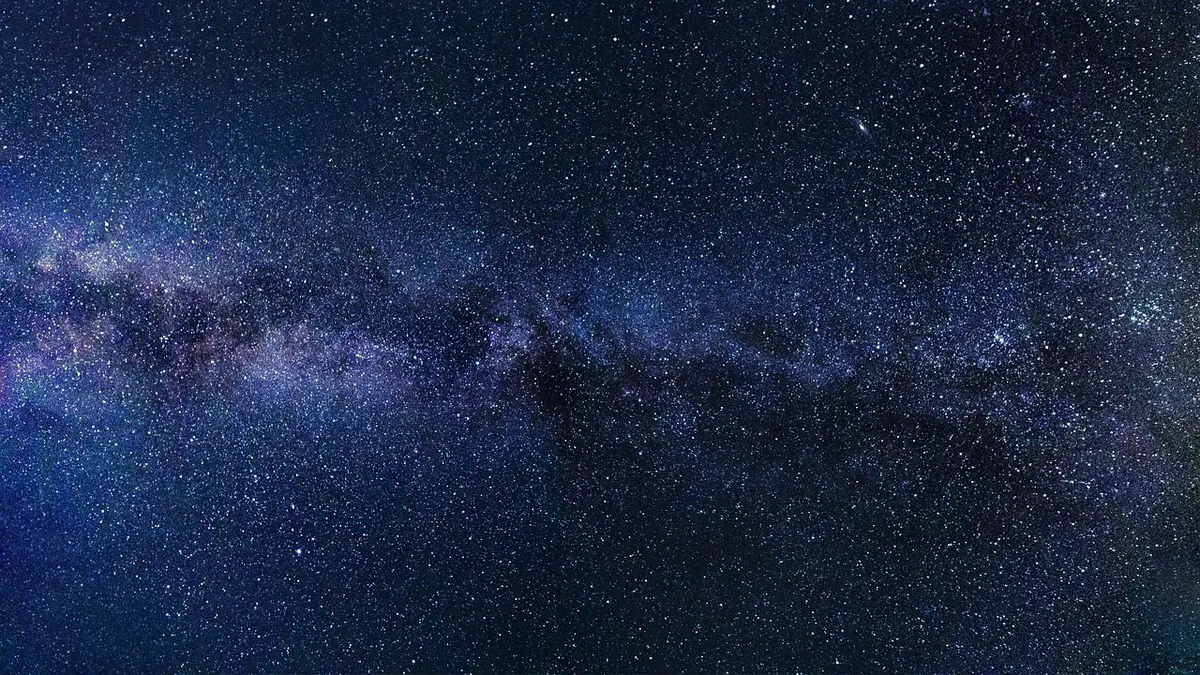
Photo: trinhkien91 / Pixabay